Study design – Observational

One of the most important facets of public health is understanding epidemiological studies. I might also add that it is the one thing I repeatedly have to look over and a lot of my peers and colleagues find confusing and struggle with.

A quick recap of what epidemiology is – Put simply, it deals with figuring out the who, what, when, where, why and how certain diseases happen and telling us the way we can overcome/stop it.

Now epidemiology is actually made up of both Observational and Interventional studies, and to start we will talk about observational studies.

They are quite self-explanatory, as they are just that – observational. All we are doing is essentially just having an overall look. However, there are different ways to do this, and that is by being either descriptive or analytical.

So what are the main differences between these two types of research/studies we can carry out and what do we gain from it? I prefer the 5W’s and 1 H method of thinking about it.

Descriptive Analytical
Who?
What?
When?
Where?
Why?
How?

So descriptive studies, look at an overall picture. It tells us what is going on, what is involved, who is involved, where it is happening and when without telling us Why or How. We basically go in without an idea for cause and effect. It essentially helps us identify them by examining patterns and by giving us an overall idea of the population, the distribution of health based on age, gender, location and time/over a period of time. It is from this, that we might identify a problem leading to ideas for new studies to figure out the why, how and perhaps even move on to an interventional study.

If let’s say I was selling chocolate and I wanted to know more about my customers, my initial descriptive study would tell me about the people who are buying my chocolates, where they live etc. I might learn, that only hipsters in their late 20’s buy my brand of chocolate but I still do not know why (well maybe because it’s unheard of?). My next task is to figure out why and perhaps how I can make my chocolate more appealing to different groups.

Examples of descriptive studies can be further broken down to cross-sectional study=ies like a health survey, ecological studies or even case reports/case series. Remember all it does, is present the facts for what they are and is a starting point for us to make associations and come up with new ideas.

Analytical studies then basically go into how this is happening and why? It is one of the ways to investigate causal relationships. So in these studies, I have a hypothesis/an idea. A health-related example would be that ‘smokers have a higher risk of lung cancer than non-smokers. We then investigate if this is true or not. How we go about this, is either with a case-control study, cohort study, cross-sectional study or an ecological study.
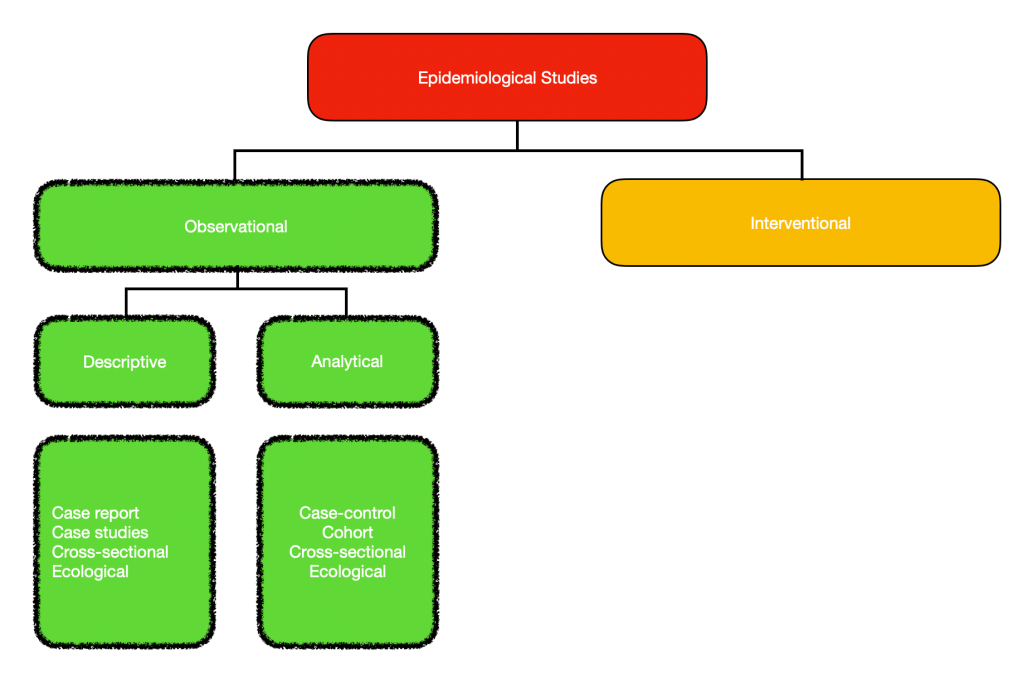
Something visual to help, the rest will be revealed as we move on.

How come cross-sectional and ecological studies are in both descriptive and analytical studies? Well, I will go into that when I talk more about the different types of studies mentioned in the next post.
Disease Detectives?

One of the first activities in my course module – Issues in Public Health was looking at the role of an epidemiologist.

What is an epidemiologist?

The explanation I personally love was by the CDC* who described them quite aptly as ‘Disease Detectives’. These sleuths search for clues looking for the cause of disease, try and identify who are the people at risk and then try to figure out how we can stop the disease from spreading and preventing a future episode.

And while familiar, I definitely did not realise that there were some differeing opinions on what the focus of epidemiologists or public health should be.

The critique has been that the focus has been to much on individual risk factors while excluding all the other factors that contribute to disease.

But should public health professionals be focusing on the social determinants of health solely OR other individual risk factors?

A good example used was in discussing how to combat Malnutrition. How do we solve this and what should the focus be?

Do we take a step back and address the other social issues contributing to poverty leading to malnutrition. Or do we spend time and effort finding out that by supplementing Vitamin A in these individuals we greatly reduce their risk of blindness and death by starting them on Vitamin A supplements? While we haven’t solved the issue of Malnutrition per se, I feel it is better to be doing something that reduces the negative outcomes cause the reality is that pushing for those changes with bureaucracy can be long-drawn out. So, why not assist and intervene where we can?

However, this of course does mean that we are diverting our focus, energy and more importantly our already limited resources. And is it then the best utilisation of our resources? – now that’s a concept in Health Economics that we will discuss in another post.

But what do you think?


*CDC – Centers for Disease Control and Prevention

Public health at the crossroads: which way forward?
https://www.thelancet.com/journals/lancet/article/PIIS0140-6736(97)09494-4/fulltext
–> this article is available for free

Should the mission of epidemiology include the eradication of poverty?
https://www.thelancet.com/journals/lancet/article/PIIS0140-6736(98)01327-0/fulltext
–> this is unfortunately paid unless you have access

Great Stink of London & tooth decay?

So, what does the Great Stink of London and tooth decay have in common?

Well, they are both examples of how public health measures have made a big impact on our day to day lives. 

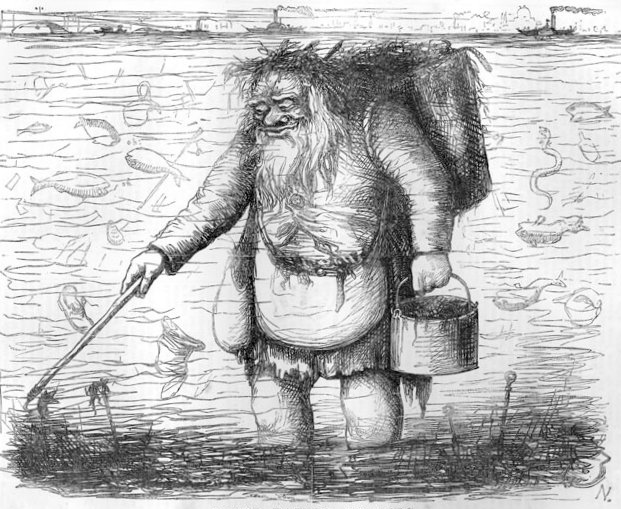
John Snow was the physician who figured out that the cholera outbreak during the Great Stink was localised to a single public water pump on Broad Street. At that point of time, the concept of disease spreading by the fecal-oral route was unheard of. Though it took time, his findings of how a contaminated water source was the source of disease in the community was what inspired fundamental changes to how water and sanitation systems are developed in cities, which in turn improved overall health. 

If you look at the back of your toothpaste tube, regardless of brand you will see that it has fluoride. This is because fluoride has been shown to help prevent tooth decay. So what would be the simplest most effective way of making sure everyone gets enough fluoride then? By the fluoridation of water. In fact a report by Public Health England showed that 5 year olds who lived in areas where fluoride levels were adjusted in the water source were 15% less likely to have tooth decay and hospital admissions for dental caries were 45% lower. 

So, what is public health and why is it important?

Well according to the WHO – it is “The art and science of preventing disease, prolonging life and promoting health through the organised efforts of society”. 

To me, it is medical care and everything else outside of it, where sometimes the simplest and smallest changes can have the largest impact and make a big difference to the lives of many. And that’s what makes it so important. 

Original: Cartoon from Punch Magazine, Volume 15 Page 152; 7 October 1848This copy: Punch archives, Public Domain, https://commons.wikimedia.org/w/index.php?curid=4465077

Why Public Health?

I often found myself feeling that I wished I could do more for my patients. In a sense, I found clinical medicine to be somewhat limited in this aspect. We focused on the here and now, pre-emptively made plans for the future and we did our best, but it simply was not enough. 

Surely there was more that could have been done to prevent this? 
Surely there was more that we could do?

I often felt in practice that what I did treatment wise accounted for little in terms of overall quality of life and health. My patients backgrounds, education levels, financial, environmental and social issues played a far more important role in determining this. The Social Determinants of Health shows that while medical care is important – it only accounts for about 10-20% of what factors into a persons overall health. Which just goes to show how incredibly important public health is. 

While recognition of the importance of public health is on the rise, there are still a lot of people who do not really understand what it encompasses. And hopefully I will make that clearer in my posts to come.