Study design – Observational

One of the most important facets of public health is understanding epidemiological studies. I might also add that it is the one thing I repeatedly have to look over and a lot of my peers and colleagues find confusing and struggle with.

A quick recap of what epidemiology is – Put simply, it deals with figuring out the who, what, when, where, why and how certain diseases happen and telling us the way we can overcome/stop it.

Now epidemiology is actually made up of both Observational and Interventional studies, and to start we will talk about observational studies.

They are quite self-explanatory, as they are just that – observational. All we are doing is essentially just having an overall look. However, there are different ways to do this, and that is by being either descriptive or analytical.

So what are the main differences between these two types of research/studies we can carry out and what do we gain from it? I prefer the 5W’s and 1 H method of thinking about it.

Descriptive Analytical
Who?
What?
When?
Where?
Why?
How?

So descriptive studies, look at an overall picture. It tells us what is going on, what is involved, who is involved, where it is happening and when without telling us Why or How. We basically go in without an idea for cause and effect. It essentially helps us identify them by examining patterns and by giving us an overall idea of the population, the distribution of health based on age, gender, location and time/over a period of time. It is from this, that we might identify a problem leading to ideas for new studies to figure out the why, how and perhaps even move on to an interventional study.

If let’s say I was selling chocolate and I wanted to know more about my customers, my initial descriptive study would tell me about the people who are buying my chocolates, where they live etc. I might learn, that only hipsters in their late 20’s buy my brand of chocolate but I still do not know why (well maybe because it’s unheard of?). My next task is to figure out why and perhaps how I can make my chocolate more appealing to different groups.

Examples of descriptive studies can be further broken down to cross-sectional study=ies like a health survey, ecological studies or even case reports/case series. Remember all it does, is present the facts for what they are and is a starting point for us to make associations and come up with new ideas.

Analytical studies then basically go into how this is happening and why? It is one of the ways to investigate causal relationships. So in these studies, I have a hypothesis/an idea. A health-related example would be that ‘smokers have a higher risk of lung cancer than non-smokers. We then investigate if this is true or not. How we go about this, is either with a case-control study, cohort study, cross-sectional study or an ecological study.
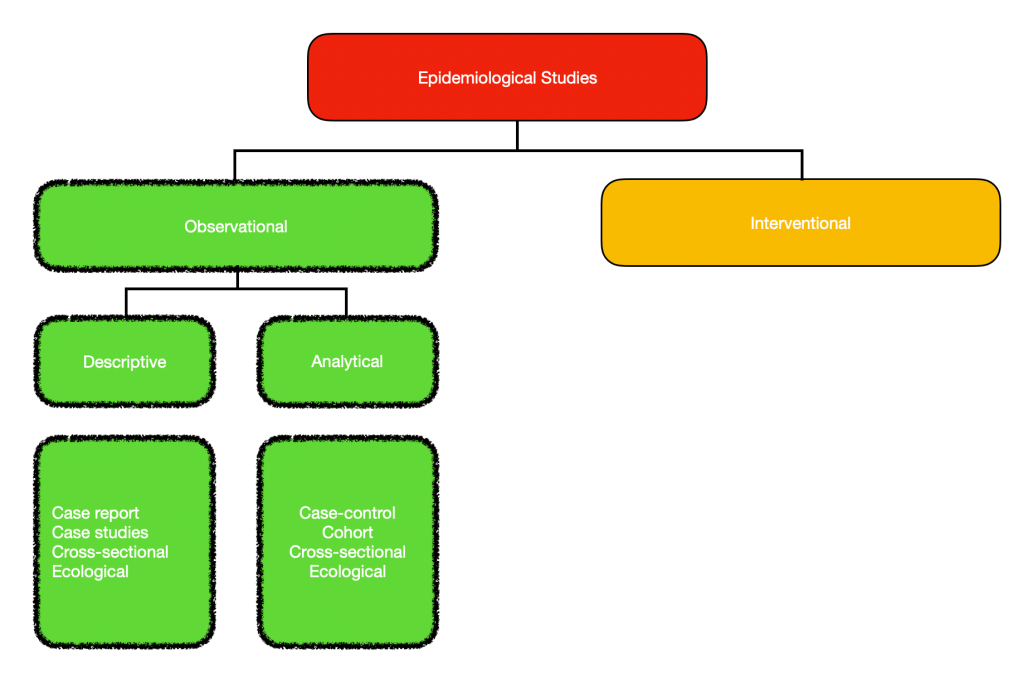
Something visual to help, the rest will be revealed as we move on.

How come cross-sectional and ecological studies are in both descriptive and analytical studies? Well, I will go into that when I talk more about the different types of studies mentioned in the next post.
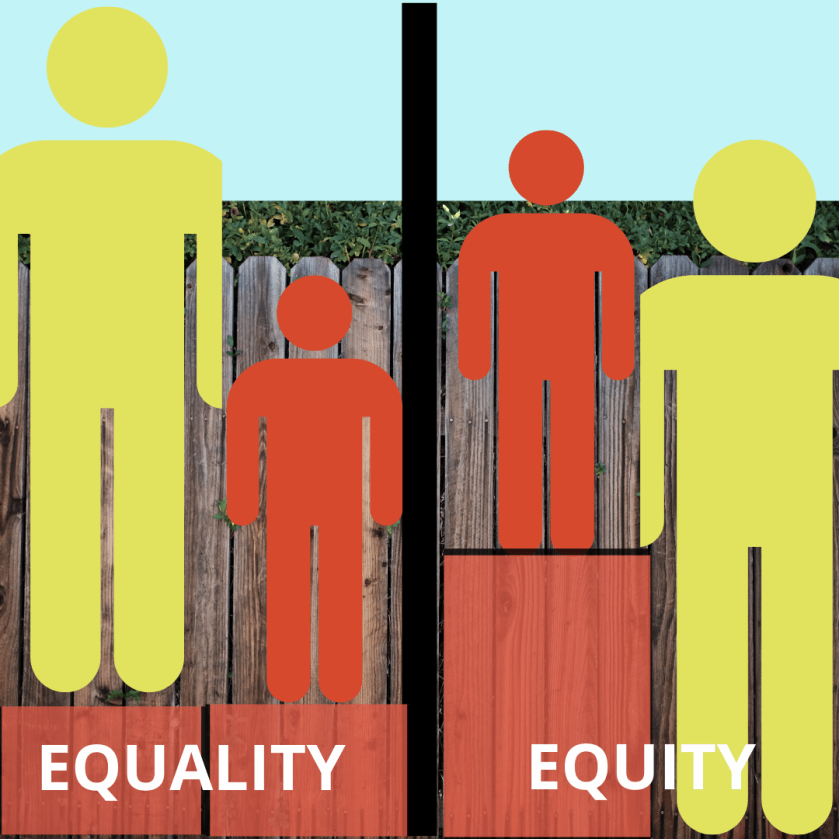
When equality is simply not enough.

I have always thought of equality as important and a necessity. I do believe that everyone deserves to be treated as an equal – in status, rights and opportunities.

But the fact is, that most of us have different opportunities because we do not start off on equal footing. We all have our own set of advantages and disadvantages which give us a leg up compared to someone else.

It is because of this that equality is simply not enough in healthcare. While the idea of dividing already scarce resources evenly across the board sounds fair in principle, is it fair to say that a child born with Cerebral Palsy should get the same allocation (think funding in terms of healthcare) as one without CP?

As such we have Equity.

And in equity we look more at how resources are distributed as opposed to how we can get the most benefit from it.

Equity basically revolves around the principles of justice and fairness. This assessment of fairness is subjective. In equity we are going to say that more money should be given to the child with Cerebral Palsy because we can argue that to have the same quality of life as a child without CP they need more assistance, special equipment and that naturally incurs more costs.

This of course could be said to not be efficient.

So efficiency has many forms – from getting the most value for money, the most amount of output from a single input to reducing wait times in healthcare.

So which do we choose – equity, equality or efficiency? Here’s another example.

When I was in Sabah (Borneo), I worked in the main tertiary referral centre. While it was great and I learnt a lot, one of the biggest issues our patients had was in accessing healthcare because of costs, distance, lack of public transportation and the lack of equally equipped healthcare facilities close by.

While I can understand that concentrating all our efforts into one main centre is more cost effective, spreading it out and equipping other units to cope better would make my patients lives a lot easier.

Is it an efficient use of our resources? Probably not, but it sure would make me feel a lot better and in this scenario I think most of you would agree. Let’s go back to the child with CP though.

Now, if we did not practice equity and went on equality (everyone gets the same) would the argument then be that the child without CP would have an added advantage and therefore and even better quality of life?

Does this then make it more efficient as a whole? Or does the negative quality of life experienced by the child with CP who got less than they would if things were equitable, counter the ‘apparent advantages’ seen and we are right back where we started?

What do you think?

What does cake and ice cream have to do with margins?

We now know what opportunity costs are and how that shows us our potential losses based on what could have been. And while that tells us where our money should go, there are still other factors to consider such as Margins and their costs and benefits.

Margins can be thought of as the next unit or a theoretical border. And Marginal Change is basically how change affects this “border” – either positively or negatively. So when weighing up decisions in healthcare, we look at marginal benefits and costs.

Marginal benefits = the benefit of one more unit of output
Marginal costs = the cost of one more unit of output

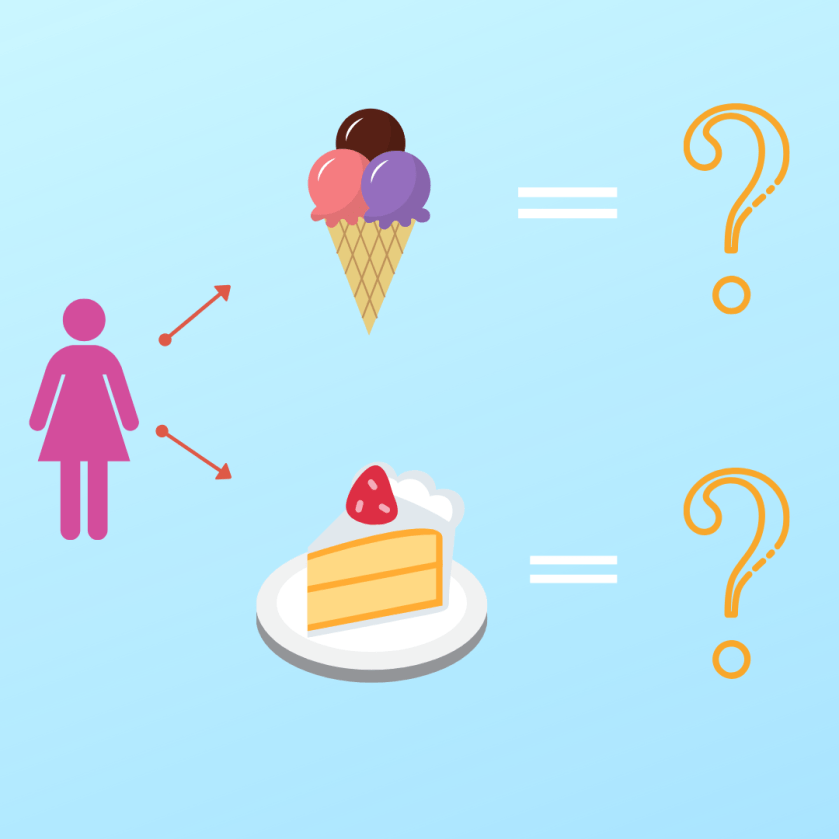
And because I like silly anecdotes to help me remember things. I think of my friend who was very worried about fitting into her wedding dress. So if the marginal benefit of having a slice of cake is greater than the marginal costs, she proceeds to have a slice of cake – cause it is delicious! However, let us pretend that having that one slice of cake will mean she will no longer fit into her wedding dress and she does not have time to get it altered for the wedding. Then we could say here that the marginal costs outweigh the benefit of having that yummy slice of cake, so she decides she is not going to have it – cause although it is yummy, her wedding will be ruined because she won’t have a dress to wear.

What is this I hear about the Law of Diminishing Marginal Utility?

I think it is important to note that Utility here refers to satisfaction or happiness gained by the recipient.

That is a pretty interesting phenomenon. You know when you decide to dig into a pint of Ben & Jerry’s and that first mouthful is the best feeling in the world? But then you have more and more, and by the end of it you feel sick cause you are lactose intolerant and realise that it was a terrible idea to eat the whole pint of ice cream. (Or is this just me?) Now that is diminishing marginal utility – cause each extra unit of input yields less and less additional output/benefit. Essentially the benefit or the good diminishes as the consumption of it increases.

So, how does this work in healthcare.

Well marginal analysis – understanding the costs, benefits and diminishing marginal utility help us get the most bang for our buck really. It lets us know how well an intervention/screening programme or service is run as well as if it is worth investing more or further in it.

It also tells us when resources should be moved from programmes producing less
marginal benefit per unit of cost to programmes producing more, as then the total benefit from the resources will increase.

The million dollar question is – Will spending more on healthcare truly show a benefit or are we going to experience the law of diminishing utility, where more money is pumped into healthcare but quality of life and overall satisfaction stagnates. Could the same additional funds instead be allocated to education or housing with better utility?

While I still do not know the answer to that question, I would love to hear your take on it.


Opportunity costs

In Disease Detectives, I talked about the utilisation of limited resources.

So the question is what factors come into play when making decisions about what are the best possible interventions/actions we should take.

Opportunity costs is one of those factors.

In healthcare our main issues are

  1. How do we get the best outcomes
  2. How do we reach the most amount of people
  3. How do we keep costs low or within the scope of the resources available

And this of course means we always have to make choices, and opportunity costs is one of the guiding factors in this decision making process. So what is opportunity costs?

It is basically the potential good outcome that is lost by the utilisation of resources or efforts in another area/intervention.

What on earth does this even mean?

The easiest way I understand this is in terms of hospital beds (in wards) and primary health care centres (outpatient/GPs).

So let us say we figure out that if one person is admitted in hospital, the same amount of funds could have been allocated to treating 15 people in a GP setting. So this is an opportunity cost because by having that one bed/admission, we lose the funds to treat 15 people in an outpatient setting.

And if I relate it to paediatrics, for every child admitted to ward requiring their parents to take time off work – that time spent in the hospital with one child also means a missed activity with other family/children or even wages lost .

Why is this important?

Because it shows us that requiring admission for treatment really should be a last resort and that it would be more cost effective if we could reduce the number of admissions.

So the next question is how do we figure out which is the best way to do that?

Mythology, culture, beliefs and health

To Understand Health Services as they are today, we need to understand what has influenced them over the years. In our module we are given examples of 9 historical factors given that has shaped health services in the United Kingdom today.

These factors are :

1. Evolving understanding of illness
2. Technology
3. Socio-demographic changes
4. Social attitudes
5. Religion
6. Finance
7. Physical environment
8. War
9. Healthcare professionals

Being Malaysian and having worked in healthcare at home, I cannot help but think of what has affected and shaped our health service. Built on the backbone of our colonial history, Malaysia’s healthcare system is similar to that of the NHS. However, one of the most pertinent historical factors which I believe still plays a role today, would be culture, mythology and religion.

From visiting the local medicine man or “bomoh”, to the consumption of Chinese Herbs to balance out the hot and cold elements, to resorting to religious leaders in search of a cure through prayer and offerings. Malaysians have come very far in their understanding of illness and do seek medical attention at hospitals, yet these cultural practices have stood the test of time and while they mostly coexist quite harmoniously, I have unfortunately had to convince some of my patients that it might be best to hedge your bets and get the best of both worlds.

However it is these reasons as well that Mental Health is still a work in progress, as a lot of it is associated with being possessed by evil demons and spirits, to having being put under a spell.

An example would be ‘Amok’ or more contemporarily known as to run amok. Amok is actually listed as a syndrome in the Diagnostic and Statistical Manual of Mental Disorders. Described by Merriam-Webster as a sudden episode of mass assault by a single individual following a period of brooding. The belief behind it was that there was a hantu belian – tiger spirit that took over the person and caused them to act out in that manner. These beliefs still persist till this day and are only some of the barriers left to overcome in addressing Mental Health issues in Malaysia. What about your country?

Can you identify with any of the 9 historical factors listed with regards to what has your country’s current healthcare services? Please do drop me a line in the comments, would love to hear about them.

365 days of Public Health?

Hi there.

Welcome to 365 days of Public Health!

I’m Praveena and I am a medical doctor with an interest in Paediatrics and of course, Public Health.

I decided to start start 365 days of public health for three reasons.

1) I am pursuing my MSc in Public Health with the London School of Hygiene and Tropical Medicine by distance learning and I think this is a good way for me to hold myself accountable and keep up to date with my course every single day.

2) When I said I wanted to pursue my MSc in Public Health a lot of people (both medics and non medics) did not understand why. I then realised that there are a lot of people who do not really understand what public health is about and what it entails. So I am hoping that this blog gives you a glimpse into some of the principles and concepts involved in public health and why it is such an important part of our lives. While I will cover my curriculum, I will also put forth bits and bobs that I find interesting about public health and the work that is done in the field.

3) And of course I am hoping that through this blog I get to meet other individuals in and out of the field who will hopefully teach me a thing or two along the way.

Cheers!

Praveena
P.S – I know 2020 is a leap year, but I figure we will stick with 365 since the school year only started in Sept/Oct anyway.