Life is like a box of chocolates – Prevalence vs Incidence

When talking about frequency we consider it in two ways, namely prevalence and incidence.

Prevalence – Is the number of known cases at a given point in time
Incidence – Is the number of new cases in a population over a specified time

Why is this significant? I like to think of it as a box of chocolates.

Out of this box of chocolates that I am using for our Christmas party, my favourite is the purple one – the awesome hazelnut and caramel filled milk chocolate. So my Prevalence in this instance would be all the purple chocolates I have at that particular point of time in said box of chocolates. I do not take into account the amount of chocolates that might be eaten during the Christmas party, gotten rid of because the wrappers were ruined nor do I consider the fact that perhaps some other kind souls would bring me more chocolate to contribute to the sweet bowl. All it tells me is the amount of purple chocolates present out of the 48 chocolates currently available.

My Incidence however, is the hope that some kind soul will bring more chocolates to said party and the potential new purple chocolates that might be added to the sweet bowl. I do not consider the amount of chocolates that have been eaten, those with ripped packaging that have to be put aside or removed cause no one likes them (here’s looking at you coconut cream). I just look at the potential amount of new purple chocolates that might be present over the total number of chocolates in hand.

However there is a lot more to incidence and prevalence and we will discuss it in the next few posts.


50,000 vs 200,000 – Which is greater?

Measuring disease and health outcomes, Part 1 – Frequency

How do we measure how often a particular disease happens in a population? How do we identify which diseases are more far-reaching or have the worst outcomes? How do we decide at what level we should intervene?

By knowing the frequency.

Frequency guides us by telling us how often an event happens in a particular population over a specific time. It helps us understand how a disease affects a population or rather the health outcomes by measuring it.

To do this we have to clearly identify what we are looking for and this is called a case definition. This is because not all health outcomes or diseases are black and white, therefore having a clear cut-off point helps us measure how many people are affected by it. For example, if we want to see how many obese people are in a community our case definition would be to look for people with a BMI > 30. It can go beyond clinical issues such as looking at the number of people over the age of 60 who had fallen in the last month. In the latter, the case could occur once or even more than that.

Basically by getting a clear definition. We are able to identify the individuals in the population.

However, knowing the frequency of an event can be misleading as population size can affect our perception of it. For example, if I said there were 200,000 known diabetics in London and 50,000 in Hull City. You would think that Hull had fewer diabetics, right? Now, what if I told you that the population of London is 8 million people while Hull only has 200,000 people. Does that change your mind?

This is why we need to know the population and identify the population at risk.

We will talk more about that in Part 2.

Where is the YOU in healthcare?

When we think about the healthcare system, there is often one aspect of care we do not talk about – YOU!

The fact is that every individual plays a rather significant role and I don’t just mean in terms of a being a recipient of healthcare services, a patient or working as a trained healthcare professional. I mean everyday people providing an element of service.

This is known as lay care.

It basically consists of self care, caring for a family member, giving advice, sharing information, emotional support and even volunteering. In fact it accounts for about 80% of all care and is rooted in every form of formal healthcare.

From the time we were children from our parents looking after us when we are ill, asking for advice from family and friends when we have any health issues, seeking over the counter pain relief to making the decision to go into hospital – all these are forms of lay care. Another big aspect is from volunteers providing a listening ear and emotional support to carers looking after the elderly/disabled/sick children. It must be mentioned that in most contexts, it is unpaid care/work.

As an intern in the Geriatric ward in Sabah, I recall not always being able to discharge medically stable inpatients. Why? Because they were unable to care for themselves nor were their families equipped to do so. This led to prolonged hospital stay, additional costs and a whole set of issues for the carer such as potential loss of income, issues at work and additional stresses to the individual. Thus begging the question of what services may need to be made available to address these needs and at a higher level perhaps even policies.

Why is it so important for formal healthcare to understand the reach of lay care?

It’s important because it is supplementary to formal healthcare at all levels. It gives us insight into the understanding of illness in the community, when people will seek healthcare, who they are comfortable seeking it from, as well as how changing times and socio-economics is causing a shift in the ability of ordinary people to provide care. This information is crucial in designing our healthcare services, identifying areas we need to improve on and expanding services accordingly.

I would love to hear about your experiences in providing lay care or where it is being provided. Do you think this has changed over time or do you see it changing? What do you think could be done in those instances.

Red Pill or Blue Pill – Randomised Controlled Trials

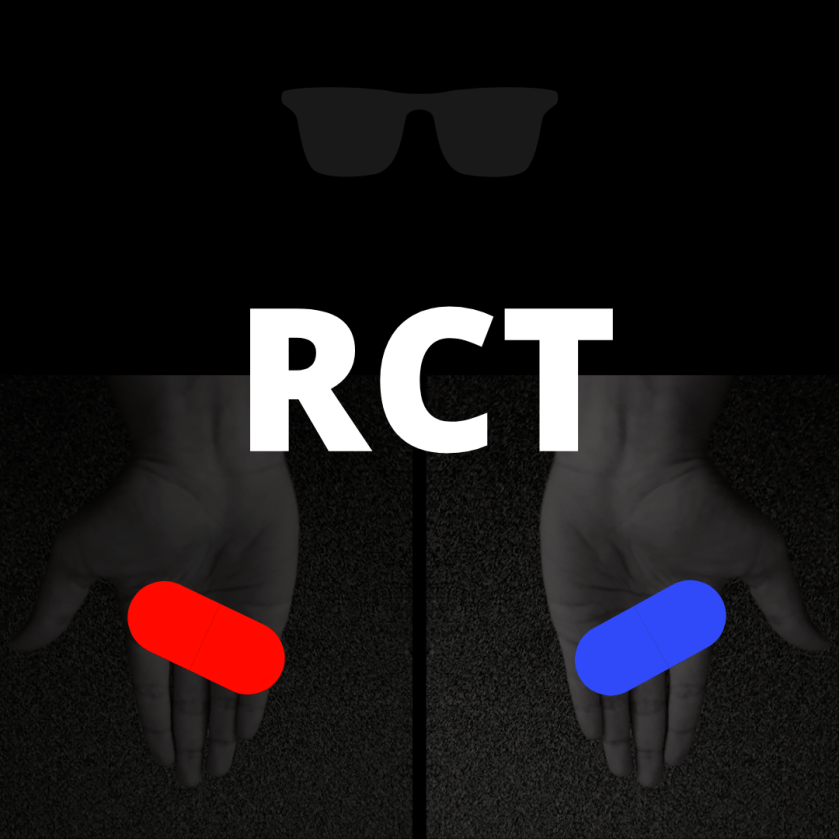
Remember that iconic scene in the matrix where Morpheus asks Neo to choose the red pill or the blue pill? That’s how I like to think of RCT’s.

Basically the researcher is “Morpheus” and the study subject is “Neo”, but instead of just 1 Neo choosing the red/blue pill we have a few. Each Neo is randomly assigned either the red or blue pill. Morpheus then sits back and watches what happens to the Neo’s and we see by the end of it who is more content – the Neo living life in blissful ignorance in the Matrix or the one steeped in reality.

Which is basically what RCT’s do. They assess how different interventions/treatments affect two different groups by following up participants. When done well, it provides the best evidence on the cause and effect relationship by studying it in real time. (temporal sequence)

There is an experimental group given the intervention/treatment (Neo leaving the Matrix) and the comparison group (controls) that gets a placebo or the current conventional treatment (Neo in the Matrix). They are then followed up to assess how effective the new intervention/treatment is in comparison to the current standard/placebo group. (Is Neo more content out of the Matrix or in?)

However unlike Neo in the Matrix, there is no choice involved and the individuals involved are randomly assigned.

Why? To avoid any selection bias by the testers choosing individuals who may have better outcomes and to ensure that both groups are as similar as possible therefore being able to distribute the confounding factors.

What are confounding factors?
It is basically any other variable that can affect your dependent variable.

For example, if we are doing a study on a sedentary lifestyle causing weight gain. The independent variable here is the sedentary lifestyle while the dependent variable is weight gain. And the confounding factors can be anything from stress, diet, food portions, genetics and metabolism – all of which can affect weight gain (dependent variable). The hope is that by randomising it, we will get an equal amount of these other confounding factors in every group therefore giving us a clearer picture on the intervention being studied.

Despite being the best method, RCT’s still has some short-comings. They tend to be expensive, time consuming and you could argue that if a person is in an RCT – they are probably more likely to be compliant therefore not really giving us a real world experience.

World AIDS Day

Today, as I clicked and read posts on World AIDS Day all across social media and the news, I realised that while it is part and parcel of my training to know about HIV/AIDs and the clinical aspects of it. I realised I did not know nearly enough about the history and how we have progressed over the years especially in public health terms. 

So, I spent most of the day reading up on it.

What I have come to learn is that unlike many other epidemics or diseases, we as human beings could have dealt with this better. The WHO states that ‘Fear, stigma and ignorance’ were the main drivers of this disease. While I cannot blame fear at the very beginning because we lacked knowledge, information and we were driven by the fear to survive. Our failings came to the forefront when we identified the groups at risk and it being spread by sexual contact.  

Essentially stigma stopped us from being able to apply the usual standards of disease control. It is appalling to think that fear, stigma and the ability to assign some form of fault/prejudice were such driving forces that we had to change our approach.

Thankfully, things have changed and we are at a point in time where there is a commitment globally to end it as a public health threat by the year 2030. The methods being used are improving identification by expanding testing, simplifying treatment as well as monitoring and of course pushing for prevention which has been demonstrated by ’low-income countries’ to be effective. One such example is how Ugandans have managed to half the rate of infections over a ten-year period by pushing for education and prevention methods. 

While, there is still a lot to do. I think my take home message while not strictly a pubic health one today – is that we as people need to try hate a little less and not be afraid of difference. Perhaps things could have been easier if we as human beings could believe that regardless of circumstances everyone had the right to life. 

I have linked some of articles below if you would like to have a read. 

Links
Applying Public Health Principles to the HIV Epidemic
https://www.nejm.org/doi/full/10.1056/nejmsb053133?fbclid=IwAR06y0hA1M4GsSlaDRFTTMHranhLRKL0bcRc8rVUmKu_MYLlWTbY6Utc6ns

WHAT IS HIV/AIDS? – Public Health
https://www.publichealth.org/public-awareness/hiv-aids/

The WHO public health approach to HIV treatment and care: looking back and looking ahead
https://www.thelancet.com/journals/laninf/article/PIIS1473-3099(17)30482-6/fulltext#seccestitle110

The WHO public health approach to HIV treatment and care: looking back and looking ahead
https://www.thelancet.com/journals/laninf/article/PIIS1473-3099(17)30482-6/fulltext

Study design – Observational

One of the most important facets of public health is understanding epidemiological studies. I might also add that it is the one thing I repeatedly have to look over and a lot of my peers and colleagues find confusing and struggle with.

A quick recap of what epidemiology is – Put simply, it deals with figuring out the who, what, when, where, why and how certain diseases happen and telling us the way we can overcome/stop it.

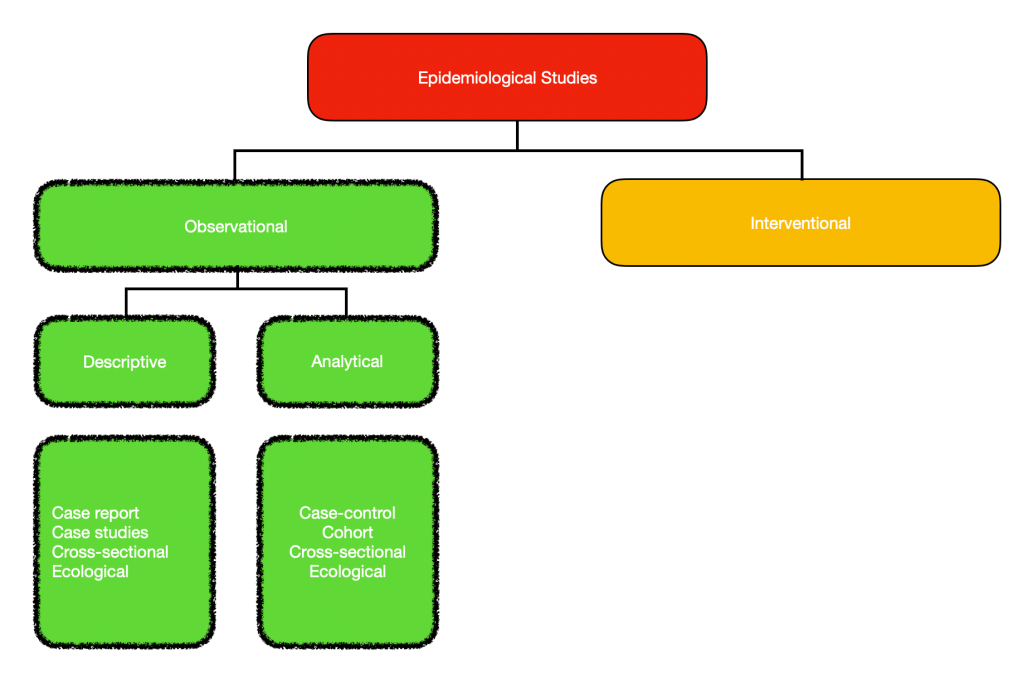
Now epidemiology is actually made up of both Observational and Interventional studies, and to start we will talk about observational studies.

They are quite self-explanatory, as they are just that – observational. All we are doing is essentially just having an overall look. However, there are different ways to do this, and that is by being either descriptive or analytical.

So what are the main differences between these two types of research/studies we can carry out and what do we gain from it? I prefer the 5W’s and 1 H method of thinking about it.

Descriptive Analytical
Who?
What?
When?
Where?
Why?
How?

So descriptive studies, look at an overall picture. It tells us what is going on, what is involved, who is involved, where it is happening and when without telling us Why or How. We basically go in without an idea for cause and effect. It essentially helps us identify them by examining patterns and by giving us an overall idea of the population, the distribution of health based on age, gender, location and time/over a period of time. It is from this, that we might identify a problem leading to ideas for new studies to figure out the why, how and perhaps even move on to an interventional study.

If let’s say I was selling chocolate and I wanted to know more about my customers, my initial descriptive study would tell me about the people who are buying my chocolates, where they live etc. I might learn, that only hipsters in their late 20’s buy my brand of chocolate but I still do not know why (well maybe because it’s unheard of?). My next task is to figure out why and perhaps how I can make my chocolate more appealing to different groups.

Examples of descriptive studies can be further broken down to cross-sectional study=ies like a health survey, ecological studies or even case reports/case series. Remember all it does, is present the facts for what they are and is a starting point for us to make associations and come up with new ideas.

Analytical studies then basically go into how this is happening and why? It is one of the ways to investigate causal relationships. So in these studies, I have a hypothesis/an idea. A health-related example would be that ‘smokers have a higher risk of lung cancer than non-smokers. We then investigate if this is true or not. How we go about this, is either with a case-control study, cohort study, cross-sectional study or an ecological study.

Something visual to help, the rest will be revealed as we move on.

How come cross-sectional and ecological studies are in both descriptive and analytical studies? Well, I will go into that when I talk more about the different types of studies mentioned in the next post.

Opportunity costs

In Disease Detectives, I talked about the utilisation of limited resources.

So the question is what factors come into play when making decisions about what are the best possible interventions/actions we should take.

Opportunity costs is one of those factors.

In healthcare our main issues are

  1. How do we get the best outcomes
  2. How do we reach the most amount of people
  3. How do we keep costs low or within the scope of the resources available

And this of course means we always have to make choices, and opportunity costs is one of the guiding factors in this decision making process. So what is opportunity costs?

It is basically the potential good outcome that is lost by the utilisation of resources or efforts in another area/intervention.

What on earth does this even mean?

The easiest way I understand this is in terms of hospital beds (in wards) and primary health care centres (outpatient/GPs).

So let us say we figure out that if one person is admitted in hospital, the same amount of funds could have been allocated to treating 15 people in a GP setting. So this is an opportunity cost because by having that one bed/admission, we lose the funds to treat 15 people in an outpatient setting.

And if I relate it to paediatrics, for every child admitted to ward requiring their parents to take time off work – that time spent in the hospital with one child also means a missed activity with other family/children or even wages lost .

Why is this important?

Because it shows us that requiring admission for treatment really should be a last resort and that it would be more cost effective if we could reduce the number of admissions.

So the next question is how do we figure out which is the best way to do that?

Why Public Health?

I often found myself feeling that I wished I could do more for my patients. In a sense, I found clinical medicine to be somewhat limited in this aspect. We focused on the here and now, pre-emptively made plans for the future and we did our best, but it simply was not enough. 

Surely there was more that could have been done to prevent this? 
Surely there was more that we could do?

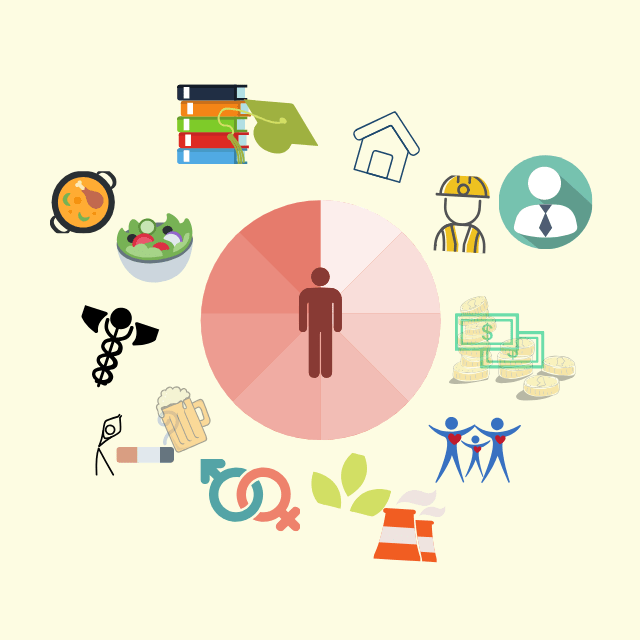
I often felt in practice that what I did treatment wise accounted for little in terms of overall quality of life and health. My patients backgrounds, education levels, financial, environmental and social issues played a far more important role in determining this. The Social Determinants of Health shows that while medical care is important – it only accounts for about 10-20% of what factors into a persons overall health. Which just goes to show how incredibly important public health is. 

While recognition of the importance of public health is on the rise, there are still a lot of people who do not really understand what it encompasses. And hopefully I will make that clearer in my posts to come.